The Altitude Hydration Equation
How much more water do I actually need to drink?
Why Your Body Thirsts for More at 5,000+ Feet
You’ve likely heard the warning the moment you stepped off the plane or began the long drive into the mountains:
Drink more water
It is the unofficial slogan of high-altitude living, spoken by locals and printed on every trailhead sign.
But for many newcomers and visitors, this advice feels vague. Does more mean an extra glass? An extra gallon? And why does it feel like no matter how much you drink, your mouth still feels like it’s filled with cotton by mid-afternoon?
Living at high altitude—generally defined as anything above 5,000 feet—changes the fundamental way your body processes fluids. To thrive in the thinner air at elevation, you need to understand the science of altitude-induced dehydration and how to create a hydration strategy that goes beyond just carrying a Nalgene.
The Science: Why Altitude Steals Your Water
To answer "how much more," we first have to understand "where it’s going." At high altitudes, three primary factors work in tandem to deplete your fluid reserves.
1. Low Humidity and Evaporative Loss
As you move higher, the atmosphere becomes thinner and colder. Cold air cannot hold as much moisture as warm air. Consequently, high-altitude environments are incredibly dry. In places like the Rocky Mountains or the Sierras, humidity often hovers in the single digits.
In this environment, your sweat evaporates almost instantly. This is known as insensible water loss. You are losing fluids through your skin 24/7, even when you aren't exercising.
2. The Altitude Ascension
When you ascend, your body undergoes a process called acclimatization. To cope with lower oxygen levels, your kidneys begin to excrete more bicarbonate through your urine. This helps balance the pH of your blood. The side effect? Increased urination. Your body is essentially "shedding" water weight to help your blood carry oxygen more efficiently.
3. Increased Respiration
The air at high altitude contains fewer oxygen molecules per breath. To compensate, your body breathes faster and more deeply. Every time you exhale in a dry environment, you are breathing out water vapor. At 10,000 feet, you can lose twice as much water through respiration as you would at sea level.
Is There a Magic Number?
While every body is different, there is a general physiological baseline for high-altitude living.
The Baseline Recommendation: Most experts recommend increasing your daily fluid intake by 1 to 1.5 liters (34 to 50 ounces) over your normal sea-level consumption.
The Math:
At Sea Level: The standard recommendation is about 2–3 liters per day.
Baseline equation: Standard: Body Weight (lbs) / 2 = Daily Ounces
At High Altitude: You should aim for 3 to 4 liters per day.
Altitude Adjustment: (Body Weight / 2) + (32 to 50 oz)
To put that into perspective:
If you use a standard 32 oz reusable water bottle, you should be finishing 4 full bottles throughout the day just to maintain a baseline.
Beyond Water: The Critical Role of Electrolytes
A common mistake made by new residents is drinking too much plain water without replacing minerals. This can lead to hyponatremia, where your blood sodium levels become dangerously low because they’ve been diluted.
At high altitude, your body isn't just losing water; it’s losing minerals. To stay truly hydrated, you need:
Sodium: Helps your body retain the water you’re drinking.
Potassium: Supports muscle function and prevents cramping.
Magnesium: Aids in sleep and muscle recovery (both harder at altitude).
The Strategy: Incorporate one electrolyte-rich drink for every three glasses of plain water. Coconut water, cow’s milk, 100% fruit juices, smoothies, electrolyte infused drinks, and electrolyte tablets are some good options to add in your daily routine.
Hydration and the ‘Altitude Headache’
The most searched high-altitude symptom is the dreaded altitude headache. This is often the first sign of Acute Mountain Sickness (AMS).
When you are dehydrated, your blood volume drops, making it harder for your heart to pump oxygenated blood to your brain. If you feel a throb behind your eyes, don't just reach for ibuprofen. Drink 16 ounces of water with electrolytes and sit down for 20 minutes.
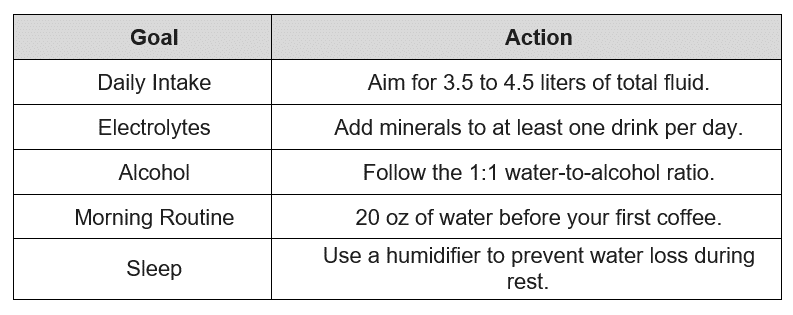
Quick Guide: High-Altitude Success Checklist
Practical Tips for Daily Mountain Living
The Morning "Flush": You lose a significant amount of moisture overnight. Drink 20 ounces of room-temperature water before reaching for coffee.
Monitor Your "Metrics": Check your urine color. Clear to pale straw means you're doing great; dark yellow means you're in the danger zone.
Eat Your Water: Load up on cucumbers, celery, and watermelon. The sodium in broths and soups is also excellent for altitude retention.
The Humidifier Hack: Run a cool-mist humidifier in your bedroom. This reduces the amount of water your body loses through respiration while you sleep.
So, how much more water do you actually need?
A lot more than you think.
Living at high altitude is a beautiful, invigorating experience, but it demands respect for your body’s biology. By increasing your intake and being mindful of electrolytes, you can skip the fatigue and enjoy the views.
Are you hosting visitors soon? The Ultimate High-Altitude Hosting Guide will help guests acclimate quickly so they can enjoy their stay!
Medical Disclaimer: The information provided in this series is for educational and informational purposes only. We provide helpful suggestions based on common resident experiences, not professional medical advice. Always consult with a qualified healthcare professional or dermatologist regarding any specific health concerns, altitude sickness symptoms, or skin conditions.
Is your kitchen ready for your guests?
Check out our kitchen page, full of recipes and tips for baking and cooking at altitude: The High-Altitude Kitchen | Master the Elevated Kitchen to learn how to adjust your favorite recipes for the mountains!
Master Life at Every Elevation
From how bread rises to how your body hydrates, living high up requires a different approach. Whether you’re looking to troubleshoot a fallen cake or want to optimize your wellness routine, we’ve got the high-altitude answers you need.
At Simply Altitude, we’re here to help you master the peaks.
Explore more resources below:
High Altitude Baking | Perfect your recipes with elevation-adjusted tips.
High Altitude Cooking | Master stovetop and oven techniques for mountain meals.
Gardening at High Altitude | Grow a lush, vibrant landscape in a thin-air climate.
New to life at elevation?
GRAB OUR FREE RESOURCE GUIDE BELOW
Living at High-Altitude Resource Guide | Baking, Gardening, and Thriving Above the Clouds