
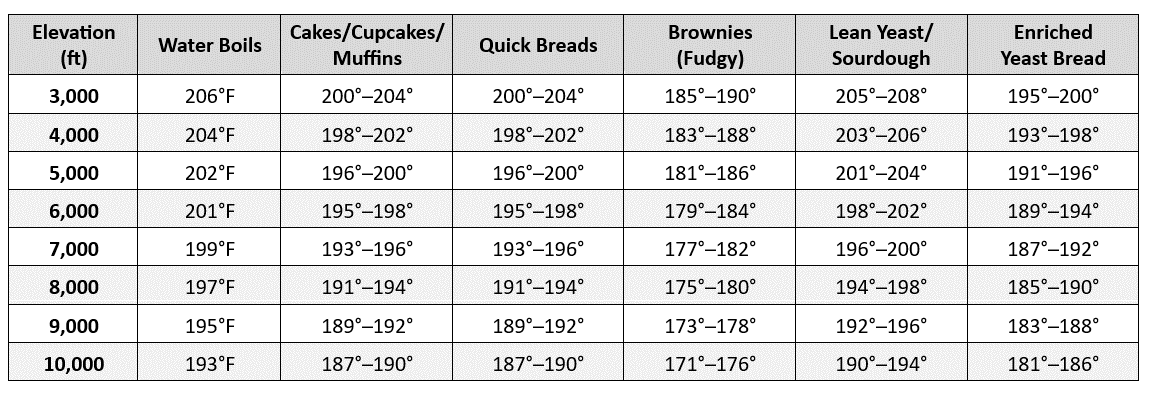
Internal Temperature Chart by Elevation
Because the boiling point of water drops as you climb in elevation, your "done" temperature targets must drop accordingly. If you try to reach sea-level internal temperatures (often 200°F–210°F) at high altitude, you will simply evaporate all the moisture out of your bake, resulting in a dry, crumbly product.
At 10,000 feet, water boils at roughly 193°F. Therefore, a cake cannot physically get hotter than that until it is completely dehydrated.
INTERNAL TEMPERATURE CHART
Category Nuances
Lean Yeast & Sourdough: These require the highest internal temp to ensure the starch is fully gelatinized and the crust is crisp. However, notice that at 10,000 feet, you are pulling the bread almost exactly at the boiling point.
Enriched Yeast Breads: Because these contain fat (butter, eggs, milk), they set at a slightly lower temperature than lean breads. Pulling them too late makes them lose that "pillowy" texture.
Brownies: These are the outlier. To keep them fudgy, you must pull them well before the boiling point of water, otherwise they turn into dry cake.
Quick Breads & Muffins: These are dense. If you pull them too early (below 190°F at high altitudes), the center will likely collapse as it cools.
Pro-Tip: The "Calibrated" Pull
To be precise, you should always test your local boiling point. Put a pot of water on the stove and use your digital thermometer to see what temperature it boils at in your specific kitchen.
Take that boiling point and subtract 2°F to 5°F. That is your maximum possible "done" temperature for cakes and breads. Anything higher, and you are just making toast!
Check out our Troubleshooting Guide for what to do if your cake reaches the right temperature but still sinks in the middle.
Explore More High-Altitude Baking
If you enjoyed this recipe, head over to our High Altitude Baking Made Simple page. It’s our combined resource for mastering the science of elevated baking, featuring helpful adjustment charts and troubleshooting tips for different altitudes.
Looking for more mountain-tested favorites?
Tender, Soft and Perfectly Risen: High Altitude Honey Wheat Bread
Tall & Tender: High Altitude Blueberry Muffins