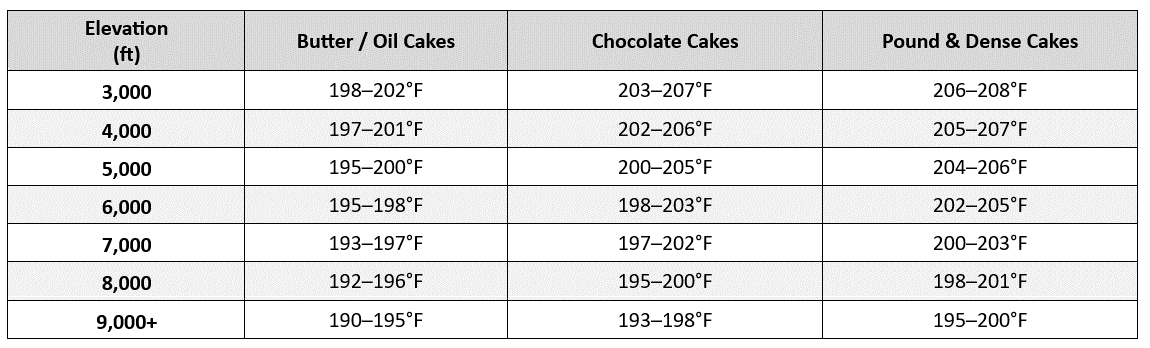
Internal Cake Temperature by Elevation
Internal temperature is one of the most reliable doneness indicators at altitude—but the ideal pull temperature changes slightly as elevation increases due to faster evaporation and quicker protein setting.
Use this chart as a range, not a rigid rule, and pair it with visual and touch tests.
High-Altitude Cake Internal Temperature Chart
Internal temperature helps prevent overbaking, the #1 cause of dry cakes at altitude. Begin checking early and pull the cake when it reaches the range for your elevation.
Use with visual + touch tests for best results
What to watch out for and WHY at each elevation range:
0–1,000 Feet (Sea Level to Low Altitude)
Adjustment note: Moisture evaporates more slowly, so cakes need a slightly higher internal temperature to fully set without collapsing.
1,000–2,000 Feet
Adjustment note: Minimal changes needed. Begin checking doneness slightly earlier than the recipe suggests.
2,000–3,000 Feet
Adjustment note: Lower air pressure allows gases to expand sooner, so structure sets earlier.
3,000–4,000 Feet
Adjustment note: Key Risk: Overbaking becomes more common here, especially in lighter cakes.
4,000–5,000 Feet
Adjustment note: Moisture loss accelerates rapidly above 4,000 feet. Cakes dry out before they look “done” visually.
5,000–6,000 Feet
Adjustment note: Pull earlier and let carryover heat finish the bake during cooling.
6,000–7,000 Feet
Common mistake: Waiting for a clean toothpick instead of trusting temperature + crumb.
7,000–8,000 Feet
Adjustment Note: Evaporation is extreme. Cakes finish setting almost immediately after removal.
8,000–9,000 Feet
Critical tip: Always verify with at least one additional doneness test.
9,000–10,000 Feet+
Extreme altitude warning: Overbaking by even 2–3 minutes can permanently dry the crumb.
How to Use This Chart Correctly
Insert thermometer into the center, avoiding the pan
Check temperature 5–10 minutes before recipe bake time
Pull cakes at the lower end of the range if:
Using dark pans
Baking thin layers
Baking very lean or egg-heavy cakes
Important High-Altitude Notes
Cakes continue to cook from carryover heat after removal
Waiting for a clean toothpick often means overbaking
Always confirm with:
Matte surface
Gentle spring-back
No bubbling sounds
Explore More High-Altitude Baking
If you enjoyed this recipe, head over to our High Altitude Baking Made Simple page. It’s our combined resource for mastering the science of elevated baking, featuring helpful adjustment charts and troubleshooting tips for different altitudes.
Looking for more mountain-tested favorites?
Moist and Rich: High Altitude Chocolate Cake
Soft & Fluffy: High Altitude Yellow Cake
Altitude Affects More Than Your Kitchen
From how bread rises to how your body hydrates, living high up requires a different approach. Whether you’re looking to troubleshoot a fallen cake or want to optimize your wellness routine, we’ve got the high-altitude answers you need.
At Simply Altitude, we’re here to help you master the peaks.
Explore more resources below:
High Altitude Baking | Perfect your recipes with elevation-adjusted tips.
High Altitude Cooking | Master stovetop and oven techniques for mountain meals.
Living Well at High Altitude | Stay hydrated and healthy while enjoying the view.
New to life at elevation?
GRAB OUR FREE RESOURCE GUIDE BELOW
Living at High-Altitude Resource Guide | Baking, Gardening, and Thriving Above the Clouds