Pancakes
High-Altitude Fluffy Pancakes
Because of the lower atmospheric pressure at higher elevation, the carbon dioxide bubbles produced by the leavening agents in pancake batter expand much faster and at a lower temperature than they do at sea level.
In pancakes—which cook without the structural support of a cake pan—this rapid expansion often causes the batter to puff dramatically on the griddle, only to deflate into a thin, rubbery disk before it’s even time to flip.
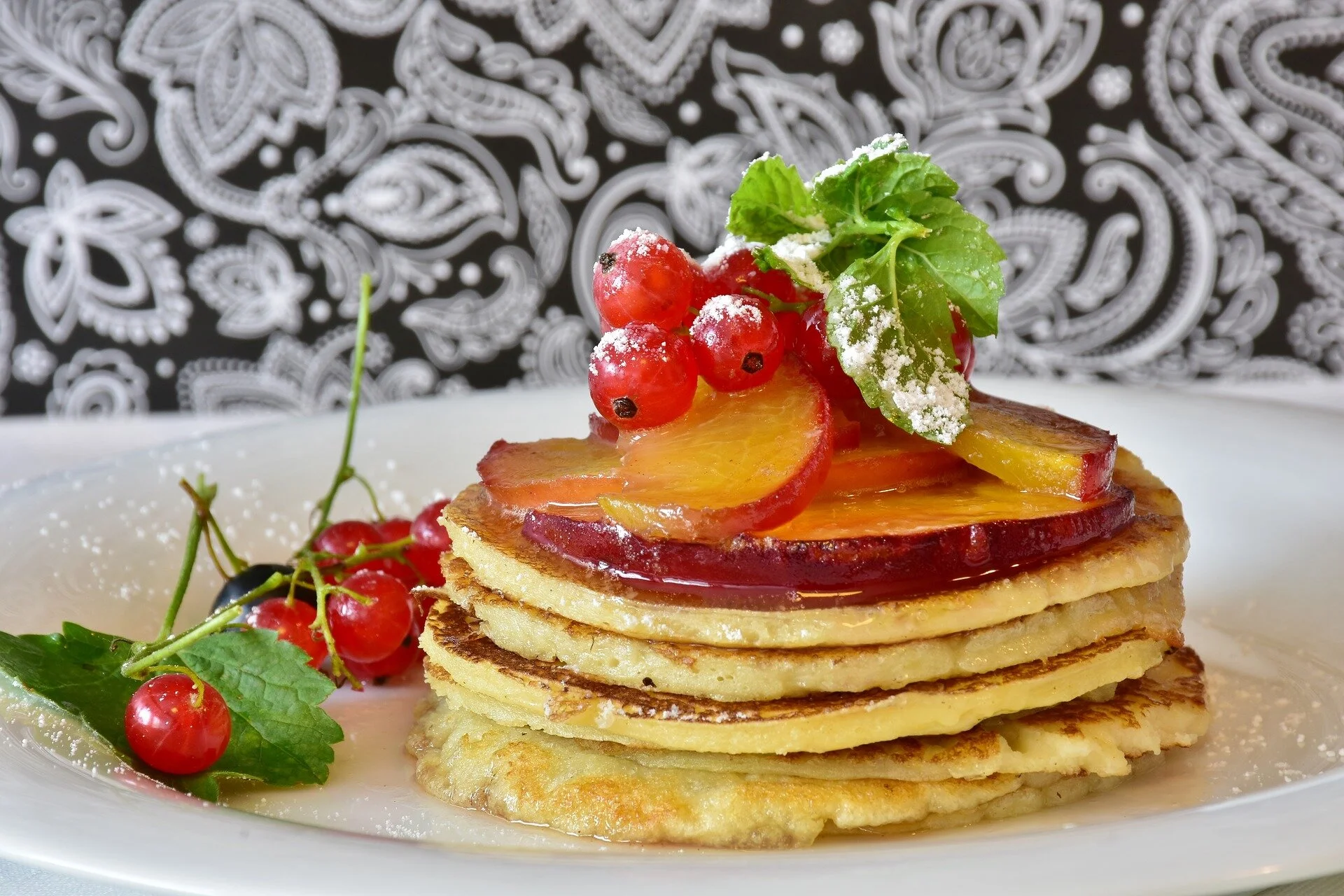
This high-altitude pancake recipe is designed to deliver thick, fluffy pancakes that hold their height from the griddle to the plate. Below, you’ll find both the recipe and the science behind the adjustments that make it work.
The High-Altitude Science
To get these results, we made three key shifts:
Reduce Leavening: In thin mountain air, standard amounts of baking powder create air bubbles that are too large and fragile. Slightly reducing the leavening and adding a small amount of baking soda produces a more stable bubble structure that won’t collapse prematurely.
Flour Hydration: High-altitude environments are extremely dry, and flour absorbs more liquid in these arid environments. Increased buttermilk keeps the batter moist and tender, preventing pancakes from turning dry or bread-like.
Structural Support: To help pancakes maintain their shape against lower air pressure, we add an extra egg white (or a large egg). The added protein strengthens the structure, trapping steam and gases so the pancakes set while they’re at their tallest.
Baking Powder: Reduced to 1 1/2 teaspoons to prevent an unstable rise.
Buttermilk: Increased to 1 1/4 cups to combat the dry climate.
Resting: A 10-minute rest is necessary to allow the flour to fully hydrate.
Pancake Recipe
PREP TIME:
10 minutes
COOK TIME:
4-5 minutes
SERVINGS:
4
Ingredients
- 1 1/2 cups all-purpose flour
- 1 1/2 teaspoons baking powder
- 2 Tablespoons granulated sugar
- 1/2 teaspoon baking soda
- 1/2 teaspoon salt
- 1 1/4 cups buttermilk (plus 1–2 tbsp if the batter is too thick)
- 1 large egg, room temperature
- 3 Tablespoons unsalted butter, melted and slightly cooled
- 1 teaspoon vanilla extract
Directions
1. Whisk Dry Ingredients : In a large bowl, whisk together the flour, sugar, baking powder, baking soda, and salt.
2. Mix Wet Ingredients : In a small bowl, whisk together the buttermilk, egg, melted butter, and vanilla.
3. Gently Combine : Pour the wet ingredients into the dry. Use a spatula to fold them together until just combined. The mixture will be lumpy! Over-mixing at altitude will lead to tough, flat pancakes.
4. Rest : Let the batter sit for 10 minutes on the counter. You will see small bubbles starting to form. This rest allows the flour to absorb the liquid, which is the secret to thick pancakes in the mountains.
5. Heat the Griddle : Heat a non-stick griddle or cast-iron skillet over medium-low heat. At high altitude, you want a slightly lower heat than usual to give the center time to cook through before the outside burns.
6. The Pour : Lightly grease the griddle with butter or oil. Scoop about 1/3 cup of batter per pancake.
7. The Flip : Wait for bubbles to form on the surface and the edges to look set. Flip gently, being careful to not smack them down, or you'll lose the air you worked so hard to get.
8. Serve : Cook for another 1–2 minutes until golden brown. Serve immediately with warm syrup, honey or fresh fruit.
Simply Altitude Pro-Tips
Don't Press: After flipping, don’t press down on the pancake with your spatula. In the low pressure of the mountains, you'll squeeze out the delicate steam pockets that provide the fluffiness.
Batter Thickness: Thick batter is the only way to get tall pancakes at altitude! If your batter is runny, add 1 more tablespoon of flour. It should be thick enough to hold its shape for a second when dropped from a spoon.
Explore More High-Altitude Baking
If you enjoyed this recipe, head over to our High Altitude Baking Made Simple page. It’s our combined resource for mastering the science of elevated baking, featuring helpful adjustment charts and troubleshooting tips for different altitudes.
Looking for more mountain-tested treats? Try these next:
High-Altitude German Pancakes: The giant pancake for sharing!
High-Altitude Muffins: Golden, moist, and perfectly risen.