Baking Powder vs Baking Soda: What’s the Difference and Why It Matters So Much in Baking
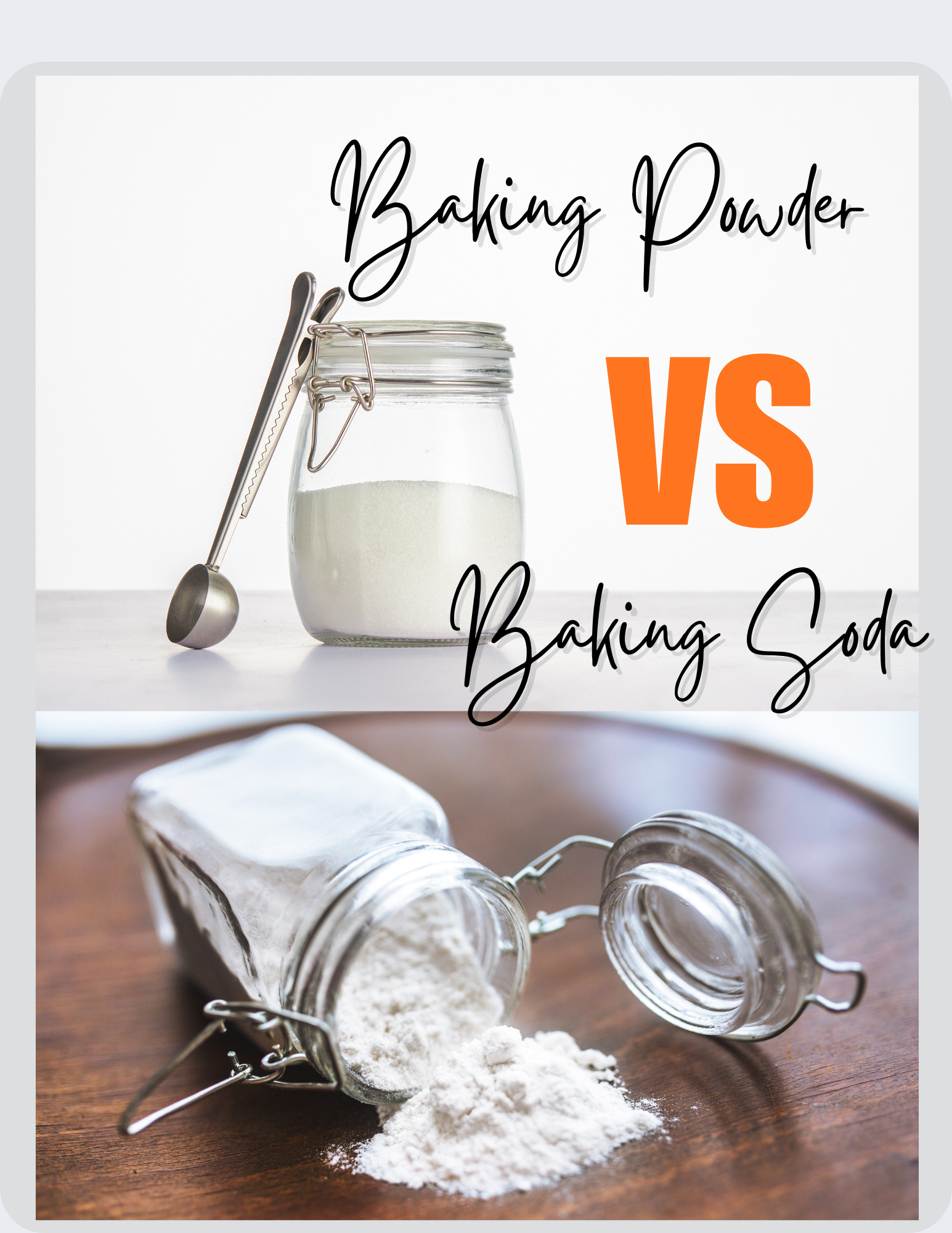
The Science of Lift: Baking Soda vs. Baking Powder
If you’ve ever pulled a flat, dense "brick" out of the oven when you were expecting a fluffy cake, you know that leavening is the unsung hero of baking. In the world of chemical leaveners, two white powders reign supreme: baking soda and baking powder.
While they look identical and live side-by-side in the pantry, they are not the same. Understanding the chemistry between them—and how they behave when you’re baking miles above sea level—is the secret to consistent, bakery-quality results.
What Baking Powder and Baking Soda Actually Do
Baking powder and baking soda are chemical leaveners that cause baked goods to rise by producing carbon dioxide gas—but they work differently.
Baking soda (sodium bicarbonate) requires an acidic ingredient to activate. Without acid, your baked goods won’t rise properly and may taste bitter.
Baking powder already contains both an acid and a base. Most modern baking powder is double-acting, meaning it activates once when mixed and again when heated, making it more forgiving.
Baking Soda: The Simple Base
Baking soda is pure sodium bicarbonate. In chemistry terms, it is a "base." For it to do its job (create bubbles), it needs an acid and moisture to trigger a reaction.
How it Works
When baking soda meets an acidic ingredient—like buttermilk, lemon juice, yogurt, molasses, or natural cocoa powder—it creates a chemical reaction that produces carbon dioxide gas (CO2). These bubbles get trapped in your batter, causing it to rise.
Key Characteristics:
Potency: It is about 3 to 4 times stronger than baking powder.
Browning: It raises the pH of the dough, which speeds up the Maillard reaction (the process that gives cookies those golden-brown, crispy edges).
Immediate Action: The reaction starts the second it hits the moisture, which is why you should get your soda-leavened batters into the oven quickly.
Baking Powder: The Complete Package
Baking powder is a mixture of sodium bicarbonate (baking soda), a dry acid (usually cream of tartar), and a stabilizer (usually cornstarch) to keep them from reacting in the tin.
How it Works
Since baking powder already contains its own acid, it only needs moisture and heat to activate. Most modern baking powders are "double-acting."
First reaction: Occurs when the powder is mixed into wet ingredients.
Second reaction: Occurs when the batter is heated in the oven.
This makes baking powder more "forgiving" than baking soda, as it gives you a second boost of lift during the bake.
What Happens When You Use the Wrong One
Using baking soda without acid leads to dense, metallic-tasting baked goods. Using baking powder where soda is needed weakens structure and reduces rise.
Using the wrong one can lead to flat cakes, dense muffins, or metallic flavors. If a recipe includes acidic ingredients, it likely calls for baking soda. If not, baking powder is usually the correct choice.
Are They Interchangeable?
The short answer is: No, not directly. Because they have different chemical compositions and strengths, swapping one for the other requires some math and pantry adjustments.
Dry or Dense Cake? Read more about the solutions at High Altitude.
Can I use Baking Powder instead of Baking Soda?
Yes, but you’ll need more of it. Since baking powder is less concentrated, the general rule is to use 3 teaspoons of baking powder for every 1 teaspoon of baking soda.
Warning: This may make your baked goods taste slightly metallic or bitter due to the extra volume of powder.
Can I use Baking Soda instead of Baking Powder?
This is trickier. If you swap soda for powder, you must add an acid to the recipe (like a teaspoon of lemon juice or cream of tartar) to activate it. If you don't, your cake won't rise, and it will taste soapy or metallic because the unreacted base (the soda) remains in the final product.
The High-Altitude Challenge
Baking at high altitudes (usually defined as 3,500 feet or higher) is a different game entirely. As you go higher, air pressure decreases. This means two things for your baked goods:
Gases expand faster: The CO2 produced by your leaveners expands more rapidly and forcefully.
Moisture evaporates quicker: Liquids boil at lower temperatures.
If you use the standard amount of leavener at high altitude, the bubbles can grow too large and pop before the structure of the cake (set by flour and eggs) is strong enough to hold them. This leads to the "High Altitude Collapse"—where a cake rises beautifully in the oven and then craters in the center.
Adjustments for High Altitude (3,000+ ft)
Reduce Leavening: Since the gas expands more easily, you don't need as much of it. Reduce your baking soda or baking powder by 15% to 25%.
Increase Liquid: Add 1–2 extra tablespoons of liquid per cup to prevent the batter from drying out too quickly.
Increase Temperature: Raise your oven temperature by 15°F to 25°F. This helps the structure "set" faster before the bubbles over-expand.
Decrease Sugar: Sugar weakens the cell walls of the bubbles. Reducing sugar by 1 tablespoon per cup helps the structure stay strong.
Testing for Freshness
Both leaveners lose their "oomph" over time, especially if stored in humid environments. If your box has been sitting in the back of the cupboard for a year, test it before you start your recipe.
To test Baking Soda: Drop a spoonful into a bowl of vinegar. It should fizz violently immediately.
To test Baking Powder: Drop a spoonful into hot water. It should bubble and foam up.
Baking is essentially a series of controlled chemical reactions. Baking soda is your heavy-hitter for browning and reacting with acids, while baking powder provides a reliable, two-stage lift. When you head into the mountains, remember that "less is more"—reducing your leaveners will help your treats stand tall against the thin air.
Now that you know the "why" behind the bubbles, you can bake with confidence!
Explore More High-Altitude Baking Tips
Looking for more guidance? Check these out:
Altitude Affects More Than Your Baking
From how bread rises to how your body hydrates, elevation changes everything.
Explore more resources below:
New to life at elevation?
GRAB OUR FREE RESOURCE GUIDE BELOW:
Living at High-Altitude Resource Guide | Baking, Gardening, and Thriving Above the Clouds