
Perfectly Boiled Eggs
The Secret to Perfect High-Altitude Hard-Boiled Eggs
If you’ve ever moved from the coast to the mountains, you probably noticed your regular 10-minute egg recipe produces an undercooked, gooey center.
Because water boils at a lower temperature at high altitudes, your eggs need more time in the boiling water to achieve the same results. Here is everything you need to know to get that perfect yellow yolk every time, whether you are at 4,000 or 8,000 feet.
The Science of the High Altitude Egg
At sea level, water boils at 212°F. However, for every 500-foot increase in elevation, the boiling point drops by about 1°F. If you’re in Denver (5,280 ft), your water is boiling at roughly 202°F. Because the heat isn't as intense, the proteins in the egg whites and yolks set more slowly.
The Foolproof High-Altitude Method
Forget the method of bringing the water to a boil and turning off the heat—it rarely works well at high altitudes because the water does not get as hot and cools down too quickly. Instead, use the Simmer Method:
Place eggs in a single layer in a saucepan and cover with at least an inch of cold water.
Bring to a rolling boil over medium-high heat.
Lower the heat slightly to maintain a gentle simmer (don't let them bounce around too much, or they’ll crack).
Start your timer (refer to the chart below).
The Ice Bath: As soon as the timer goes off, put the eggs in a bowl of ice water for at least 5 minutes. This stops the cooking and makes them easier to peel.
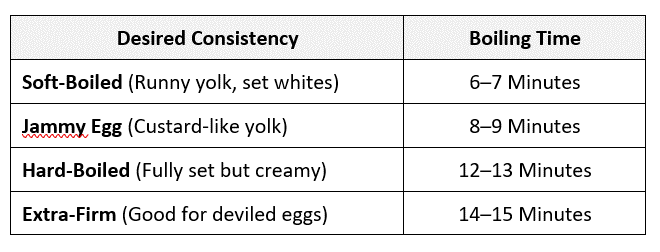
Pro Tip: If you are above 8,000 feet, add an additional 1–2 minutes to the times listed above.
3 Tips for Easy Peeling
Don’t use farm-fresh eggs: Fresh eggs have membranes that stick to the shell like glue. Eggs that have been in the fridge for 7-10 days are much easier to peel.
The Boiling Start alternative: You can drop eggs directly into already boiling water. If you prefer this, lower them gently with a slotted spoon and add 1 minute to the times above.
Crack before the bath: Before dropping them into the ice water, give the shells a gentle crack all over. The water gets under the membrane and helps the shell slide off.



Honey wheat bread collapsing at high altitude? This tender honey wheat bread bakes up soft, sturdy, and perfectly risen. Tested at 3,000+ feet with exact adjustments that work.